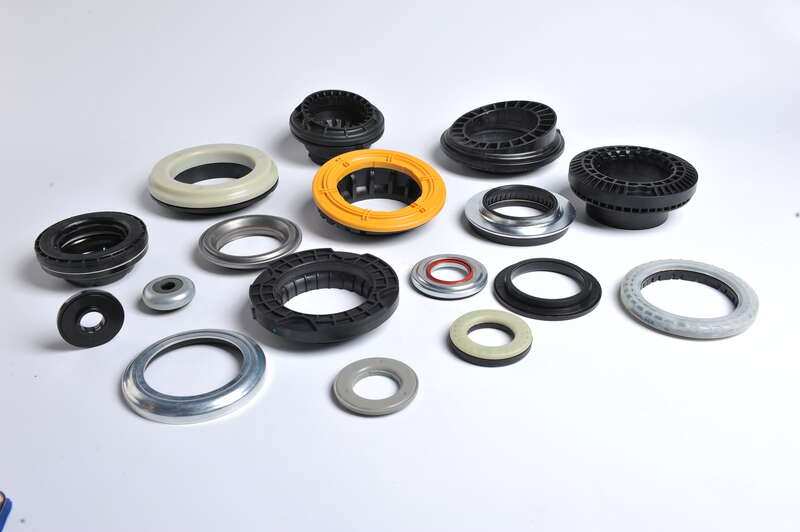
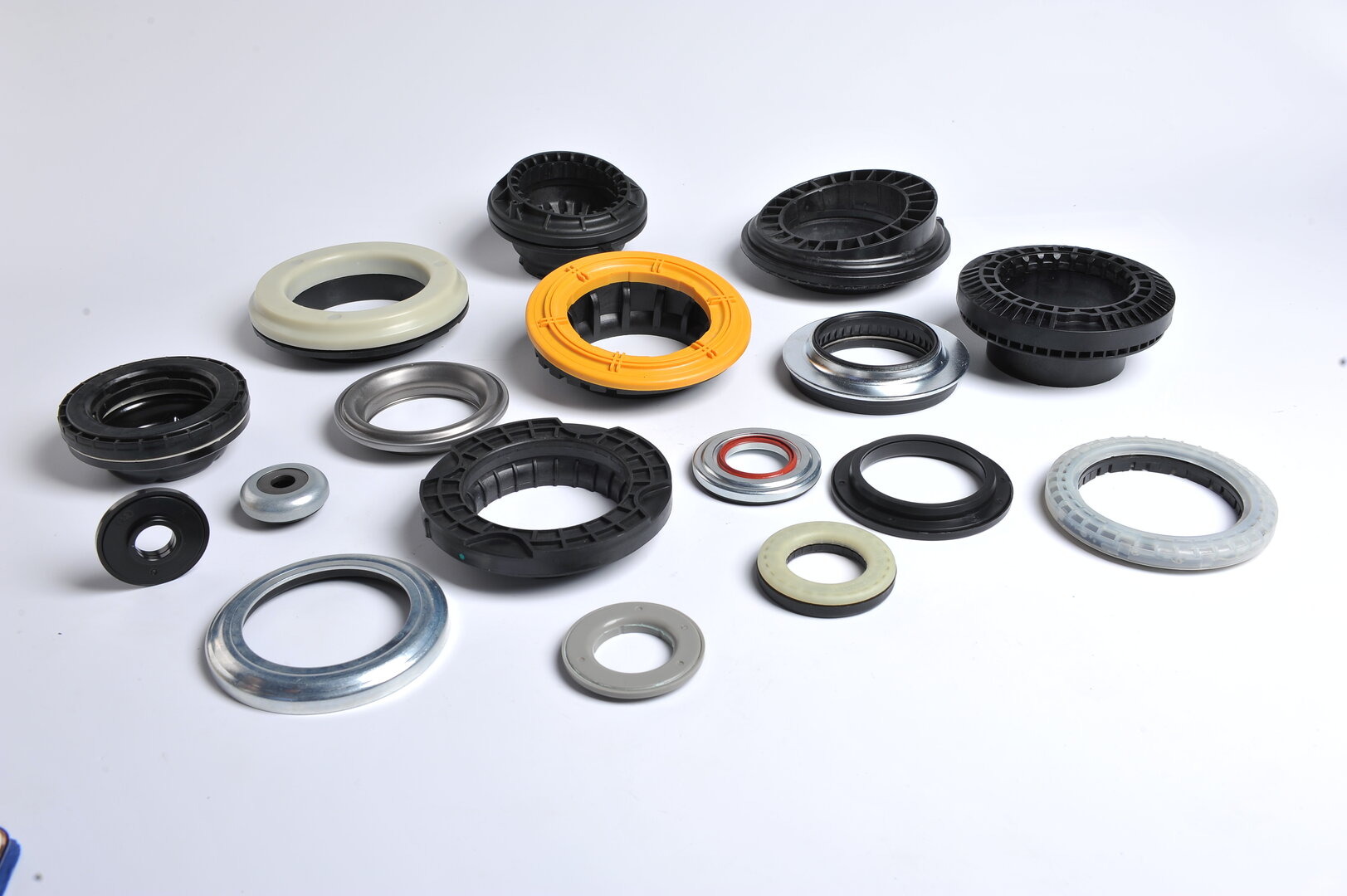
Inside every quality shock absorber is a component that most drivers never see but absolutely depend on: the shock absorber bearing. This precision-engineered part allows the strut assembly to rotate freely with steering while simultaneously supporting the vehicle's weight through the spring seat. A failure here means noise, reduced handling, and premature strut wear.
But what goes into making a bearing that can withstand hundreds of thousands of cycles in all weather conditions? This article takes you through every stage of the manufacturing process — from the steel mill to the finished component — and explains what separates world-class bearings from cheap alternatives.
Whether you are an OEM procurement specialist, a quality engineer, or an aftermarket distributor, understanding the production process is essential for making informed sourcing decisions.
1 Steel Selection — GCr15 / SAE 52100
Every high-quality shock absorber bearing begins with the right steel. The industry standard is GCr15 (Chinese designation) or SAE 52100 (international designation) — a high-carbon chromium bearing steel with exceptional hardness, wear resistance, and dimensional stability after heat treatment.
GCr15 steel contains approximately 1.0% carbon and 1.5% chromium, along with controlled amounts of manganese and silicon. The chromium content ensures deep hardenability, allowing the steel to achieve uniform hardness throughout the bearing raceway cross-section.
At Chilong, all incoming steel coils and bars are verified with spectral analysis to confirm chemical composition within specification limits. Only mill-certified materials from approved domestic and international steel mills are used in production.
2 Forging and Turning
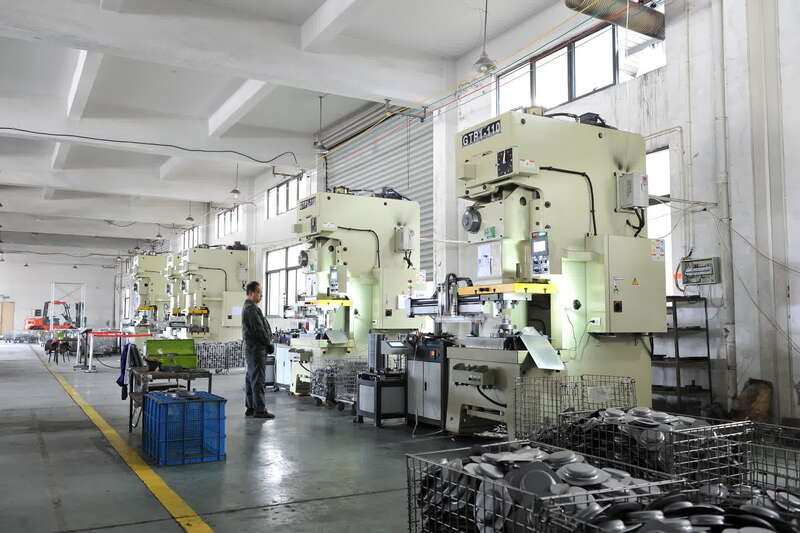
Once the raw steel is verified, it undergoes forging or stamping to form the rough shape of the bearing rings. For shock absorber bearings, the inner and outer rings are most commonly produced by:
- Hot forging — Steel bars are heated to approximately 1050°C and pressed into ring blanks using hydraulic or mechanical presses. This process aligns the grain structure of the steel, resulting in superior fatigue strength.
- Cold stamping — For thinner-section rings, cold forming from steel strip may be used. This offers better material utilization and dimensional consistency.
After forming, the rings undergo rough turning on CNC lathes to remove scale, achieve basic concentricity, and prepare the surfaces for heat treatment.
3 Heat Treatment — Quenching and Tempering
Heat treatment is arguably the most critical step in bearing manufacturing. The goal is to achieve a martensitic microstructure with a hardness of 58–64 HRC (Rockwell C scale), providing the wear resistance needed for long bearing life.
The process involves three stages:
- Austenitizing — Rings are heated to 830–860°C in a controlled-atmosphere furnace to prevent decarburization (surface carbon loss).
- Quenching — The rings are rapidly cooled in oil at 60–80°C, transforming the austenite into hard martensite. This step must be precisely controlled to avoid cracking or excessive distortion.
- Tempering — The hardened rings are reheated to 150–200°C for 2–4 hours to relieve internal stresses and achieve the final hardness specification. Tempering improves toughness without significantly reducing hardness.
Post-heat treatment, rings undergo hardness testing (Rockwell or Vickers) and metallographic inspection to verify microstructure.
4 Precision Grinding
After heat treatment, the bearing rings are too hard for conventional cutting tools. Precision grinding using superabrasive wheels (CBN or aluminum oxide) is used to achieve the final dimensions and surface finish.
Several grinding operations are performed in sequence:
- Face grinding — Grinds the ring end faces flat and parallel to within 0.01 mm
- Outer diameter (OD) grinding — Achieves the final outer diameter with tolerances of ±0.005 mm
- Inner diameter (ID) grinding — Grinds the raceway surface to precise dimensions and surface finish (Ra 0.1–0.2 μm)
- Raceway grinding — Creates the curved groove that guides the balls or rollers; critical for load distribution and smooth rotation
- Superfinishing — A final ultra-precision honing step that achieves mirror-like surface finish (Ra 0.04–0.08 μm) for reduced friction and noise
Throughout the grinding process, in-process gauging ensures every dimension stays within specification. Any deviation triggers automatic compensation on the grinding machine.
5 Cage Manufacturing
The bearing cage (also called the retainer or separator) keeps the rolling elements evenly spaced and prevents them from contacting each other. For shock absorber bearings, two cage types are common:
Steel cages (stamped): Made from low-carbon steel strip (SPCC/DC01) in progressive stamping dies. Steel cages offer high strength and temperature resistance. The stamped pockets are then formed to cradle the balls securely.
Polymer cages (nylon/PA66+GF): Injection-molded from glass-fiber-reinforced nylon (PA66+30%GF). Polymer cages offer lower weight, self-lubricating properties, quieter operation, and excellent fatigue resistance. They are increasingly preferred in modern automotive bearings.
After manufacturing, cages are inspected for dimensional accuracy, flash, and material integrity. Polymer cages undergo impact testing at low temperatures (-40°C) to ensure winter performance.
6 Assembly and Lubrication
With all components manufactured and inspected, the bearing is ready for assembly:
- Ball/Roller insertion — Precision-grade steel balls (G10 or G5 per ISO 3290) or rollers are loaded into the cage pockets.
- Ring assembly — The inner ring is inserted into the cage-and-ball assembly, and the outer ring is pressed over it using a controlled force.
- Lubrication — A measured quantity of lithium-based or polyurea-based grease is injected. The grease type and fill percentage (typically 25–35%) are critical for bearing life and torque characteristics.
- Post-grease conditioning — The bearing is rotated to distribute the grease evenly across raceways and rolling elements.
7 Sealing
Bearings must be protected from contamination — road grit, water, salt, and dust — all of which rapidly accelerate wear. Two sealing configurations are common:
Rubber seals (contact or non-contact): NBR (nitrile butadiene rubber) seals are pressed into the outer ring. Contact seals provide the best contamination protection but add some drag. Non-contact seals (with a labyrinth gap) reduce drag but offer slightly less protection.
Metal shields: Stainless steel or SPCC shields are pressed into the outer ring with a controlled interference fit. Shields offer excellent protection against large particles and are more durable than rubber in high-temperature environments, but provide less effective sealing against fine dust and moisture.
For automotive shock absorber bearings, contact rubber seals are the standard choice due to the harsh operating environment near the road surface.
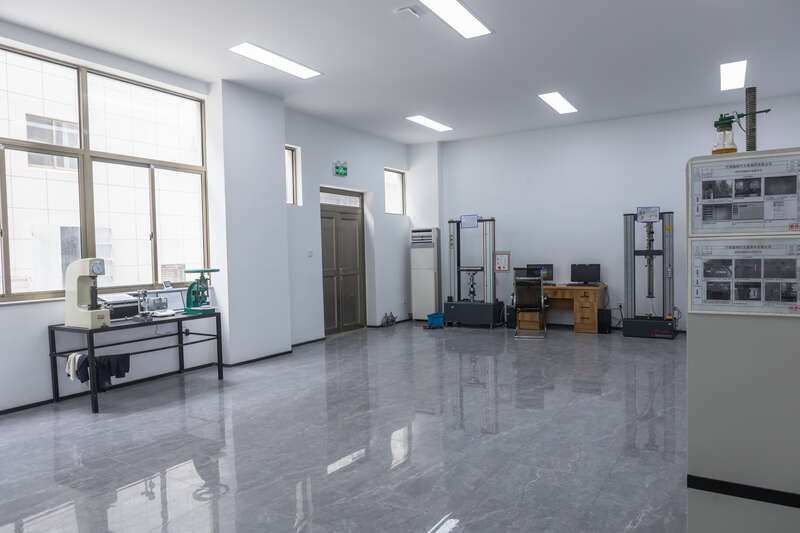
8 Quality Inspection
Every finished bearing undergoes multiple inspection checks before it can be approved for shipment:
- Dimensional inspection — Bore diameter, OD, width, and runout are measured using air gauges and laser micrometers
- Radial clearance (internal clearance) — Verified against specification using a feeler gauge or dedicated clearance tester
- Noise testing (Anderon meter) — Bearings are rotated at controlled speed and vibration is measured in μm/s. Standards typically require Anderon values below 20 dB for automotive applications
- Torque testing — Starting torque and running torque are measured to ensure consistency
- Appearance inspection — Visual and microscopic inspection for surface defects, rust, scratches, or contamination
- Seal integrity test — Bearings are tested for grease leakage at elevated temperatures
At Chilong, 100% inspection is performed on noise, torque, and appearance dimensions. Statistical process control (SPC) data is maintained for traceability.
Precision Grades: P0, P6, and P5 Explained
Bearing precision is classified by ISO and GB/T standards. The most common grades for shock absorber bearings are:
| Grade | ISO Equivalent | Tolerance (Inner Bore) | Runout | Typical Application |
|---|---|---|---|---|
| P0 (Normal) | ABEC 1 | ±0.012 mm | 0.015 mm | General industrial, basic automotive |
| P6 | ABEC 3 | ±0.008 mm | 0.010 mm | Standard automotive, high-speed applications |
| P5 | ABEC 5 | ±0.005 mm | 0.005 mm | Premium automotive, precision machinery |
Chilong manufactures shock absorber bearings to P5 grade as standard, with P6 available for price-sensitive applications. The tighter tolerances of P5 ensure consistent performance, lower noise, and longer service life — particularly important in strut top mounts where bearing alignment directly affects tire wear and steering feel.
Common Quality Issues in Cheap Bearings
- Substandard steel — Cheap bearings may use low-carbon or re-rolled steel that lacks the hardenability of proper GCr15. Result: rapid raceway wear and early failure.
- Inadequate heat treatment — Skipping or shortening the tempering cycle to save costs leads to brittle bearings prone to cracking under impact loads.
- Poor grinding quality — Inconsistent raceway geometry creates stress concentrations and increased friction. This shows up as higher noise levels and reduced bearing life.
- Insufficient or degraded grease — Low-quality bearings often use insufficient grease (under 15% fill) or low-grade grease that degrades quickly. Result: increased friction, higher operating temperature, and accelerated wear.
- Contamination — Bearings assembled in non-cleanroom environments can contain metal chips, dust, or fibers trapped in the grease. These act as abrasives inside the bearing.
- Inferior seals — Poorly fitted or low-durometer seals allow contamination ingress and grease leakage, drastically reducing service life.
What Distinguishes Chilong's Bearings
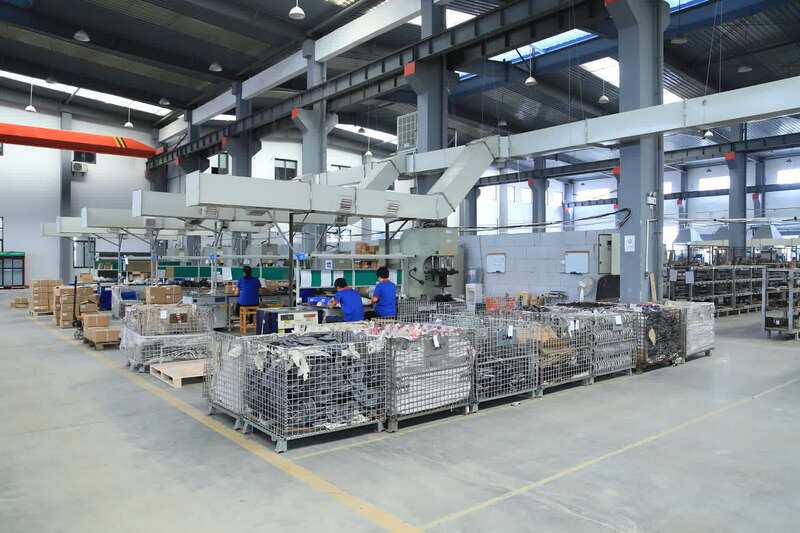
Chilong Auto Parts has invested heavily in bearing manufacturing capability and quality systems. Here is what sets our products apart:
- P5 precision grade as standard — All Chilong shock absorber bearings are manufactured to P5 tolerance, exceeding the P6/P0 grades used by many competitors
- 100% inspection — Every bearing is individually tested for noise, torque, and dimensional accuracy before packing
- GCr15 bearing steel — We use only certified GCr15 steel from approved mills, with full material traceability
- Controlled heat treatment — Continuous-belt furnaces with atmosphere control ensure consistent hardness from 58–62 HRC across every batch
- Professional-grade grease — We use lithium complex or polyurea greases with a 28–32% fill ratio for optimal lubrication life
- Double-lip contact seals — Our bearings feature NBR double-lip seals with anti-dust ribs for maximum protection
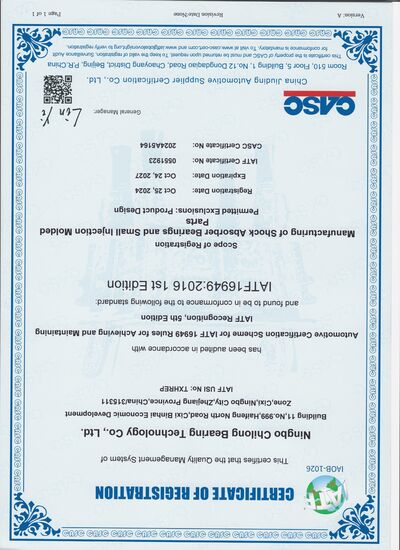
- IATF 16949 quality management — Fully documented processes with lot traceability from raw material to finished product
How to Specify Bearings for OEM Projects
When sourcing shock absorber bearings for OEM or Tier-1 projects, the following specification items should be clearly defined:
| Specification Item | Typical Requirement | Notes |
|---|---|---|
| Bearing Steel | GCr15 (SAE 52100) | Specify chemical composition limits and heat treat response |
| Hardness | 58–62 HRC | After heat treatment; specify measurement method (Rockwell C) |
| Precision Grade | P5 (ABEC 5) | Or as agreed; specify tolerance on bore, OD, width, and runout |
| Radial Clearance | C2 or CN | Per ISO 5753; depends on operating temperature range |
| Grease Type | Lithium complex / Polyurea | Specify NLGI grade, base oil viscosity, temperature range |
| Grease Fill | 25–35% | Percentage of free internal volume |
| Seal Type | Double-lip contact (NBR) | Specify seal material and lip geometry |
| Noise Level | <20 dB (Anderon) | Test speed and method to be agreed |
| Quality Documentation | PPAP Level 3 | Including control plan, FMEA, MSA, and capability studies |
Bearing Life Calculation (L10 Life)
Bearing life is typically expressed as L10 life — the number of revolutions (or operating hours) that 90% of a group of identical bearings will complete before the first signs of fatigue appear. The standard calculation per ISO 281 is:
L10 = (C/P)^ε × 10^6 revolutions
Where:
C = Dynamic load rating (N)
P = Equivalent dynamic bearing load (N)
ε = 3 for ball bearings, 10/3 for roller bearings
For shock absorber bearings, the L10 life is typically rated at 100,000–200,000 km under normal operating loads. Factors that significantly reduce bearing life include:
- Insufficient lubrication or grease degradation
- Contamination ingress through worn seals
- Misalignment during installation (exceeding 0.5° angular misalignment)
- Over-tightening of the strut top nut (compressing the bearing beyond design limits)
- Road salt corrosion in cold-climate operation
Chilong designs all shock absorber bearings with an L10 life safety factor of 3× under rated load conditions, ensuring reliable service well beyond the typical vehicle warranty period.
Frequently Asked Questions
How long do shock absorber bearings typically last?
Under normal driving conditions, quality shock absorber bearings (P5 grade) last 80,000–150,000 km. The actual lifespan depends on road conditions, vehicle weight, seal integrity, and maintenance. Premature failure before 50,000 km typically indicates a quality or installation issue.
What are the symptoms of a bad strut bearing?
Common symptoms include: grinding or popping noise when turning the steering wheel at low speeds, excessive play in the strut top mount, uneven steering effort, and vibration through the steering wheel. In severe cases, the bearing may collapse, causing the strut to shift out of position.
What is the difference between P5 and P6 bearing precision?
P5 (ABEC 5) offers tighter dimensional tolerances than P6 (ABEC 3). For shock absorber bearings, the key differences are: bore tolerance (±0.005 mm vs ±0.008 mm), runout (0.005 mm vs 0.010 mm), and surface finish requirements. P5 bearings run quieter, smoother, and have more consistent torque characteristics.
Can shock absorber bearings be repacked with grease?
In theory, yes — but in practice, it is not recommended. The sealed, non-serviceable design of modern strut bearings means that attempting to repack grease risks damaging the seals or introducing contamination. Replacement with a new bearing is the proper solution.
What causes bearing noise when turning the steering wheel?
Bearing noise during steering is most commonly caused by: contamination ingress (grit or moisture in the bearing), grease degradation or dry-out, raceway brinelling from impact loads, or corrosion from road salt exposure. In cold climates, frozen moisture in the bearing can also cause temporary noise.
Does Chilong provide custom bearing designs for OEM projects?
Yes. Our engineering team can design and manufacture custom shock absorber bearings to your specifications, including custom dimensions, load ratings, seal configurations, and lubrication. Contact our sales team with your requirements for a technical review and quotation. Minimum order quantities apply for custom designs.
How are shock absorber bearings tested for quality?
Chilong performs 100% inspection on every bearing including: dimensional measurement (bore, OD, width), noise testing (Anderon meter), torque testing (starting and running), and visual inspection. Batch testing includes radial clearance verification, seal integrity testing, and salt spray corrosion testing per ASTM B117.
Need Expert Advice? Contact Our Team
Looking for a reliable bearing supplier for your next project? Our technical team can help you select the right bearing specification, provide samples for testing, and support you through the PPAP approval process.
Contact Our Team →