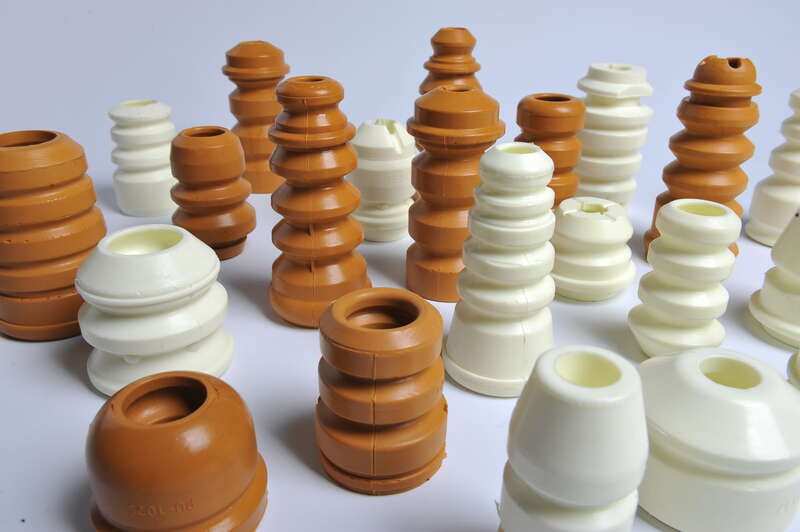
When it comes to suspension performance, few components are as deceptively simple — and as critically important — as the humble suspension bushing. These cylindrical elastomeric components sit at every pivot point in a vehicle's suspension: control arms, sway bars, trailing arms, and shock absorber eyes. Their job is to absorb vibration, accommodate articulation, and maintain precise geometry under load.
Choosing the right bushing material can mean the difference between a compliant, quiet ride and one plagued by harshness or premature wear. For OEMs, aftermarket suppliers, and fleet managers, understanding rubber vs polyurethane vs rubber-metal bonded bushings is essential for making informed sourcing decisions.
In this guide, we break down each material type, compare their performance characteristics, and help you determine which is best for your application.
Material 1: Natural Rubber (NR)
Natural rubber (NR) has been the go-to material for suspension bushings since the early days of automotive engineering. It offers excellent elasticity, good fatigue resistance, and superior noise, vibration, and harshness (NVH) damping properties. The molecular structure of natural rubber allows it to return to its original shape after deformation — a property critical for maintaining suspension geometry over millions of cycles.
Advantages
- Outstanding NVH isolation — Natural rubber absorbs road noise and vibration better than any alternative
- Low cost — Material and tooling costs are significantly lower than PU or bonded alternatives
- Good elasticity — Allows for necessary suspension articulation without binding
- Proven track record — Decades of OEM use with well-understood performance characteristics
Limitations
- Limited durability — Natural rubber degrades over time due to heat, oil exposure, and ozone
- Compression set — Under constant load, rubber can permanently deform, leading to loose suspension feel
- Temperature sensitivity — Performance changes significantly in extreme cold or heat
- Shorter service life — Typically 50,000–80,000 km before replacement is needed
Material 2: Polyurethane (PU / Microcellular PU)
Polyurethane (PU) bushings entered the aftermarket as a performance-oriented alternative to rubber. By substituting the carbon-carbon bonds of natural rubber with urethane linkages, PU achieves significantly higher stiffness and durability. Microcellular PU — a variant with controlled foam-like porosity — offers a middle ground between solid PU's stiffness and rubber's compliance.
Advantages
- Superior durability — PU can last 2–3 times longer than natural rubber in the same application
- Excellent handling — Higher stiffness reduces deflection under cornering loads, improving steering response
- Oil and chemical resistance — PU is far more resistant to automotive fluids than natural rubber
- Consistent performance — Less affected by temperature extremes than NR
Limitations
- Increased NVH transfer — Higher stiffness transmits more road noise and vibration into the cabin
- Higher cost — Both material and tooling costs exceed those of natural rubber
- Potential for squeaking — Without proper lubrication or anti-squeak design, PU bushings can develop noise
- Overly stiff for comfort-oriented vehicles — Not ideal for passenger cars where ride comfort is prioritized
Material 3: Rubber-Metal Bonded
Rubber-metal bonded bushings represent the industry standard for OEM applications. In this design, a natural rubber or synthetic rubber core is chemically bonded to inner and outer metal sleeves during vulcanization. The metal sleeves provide structural mounting points while the rubber layer delivers controlled compliance.
This construction offers the best of both worlds: the NVH isolation of rubber with the precision mounting and load-bearing capacity of metal. From compact cars to heavy trucks, rubber-metal bonded bushings dominate production vehicle suspension systems.
Advantages
- Balanced performance — Excellent NVH with good load-bearing capacity
- Precise geometry control — Bonded construction maintains alignment under load better than rubber alone
- OEM standard — Specified by virtually all automotive manufacturers for production vehicles
- Design flexibility — Radial, axial, and torsional stiffness can be tuned independently through geometry
Limitations
- Bond integrity critical — Poor bonding leads to premature failure; requires strict process control
- Higher manufacturing cost — More complex production than simple rubber bushings
- Not user-serviceable — Typically replaced as an assembled unit rather than repairable
Detailed Comparison: Rubber vs Polyurethane vs Rubber-Metal
| Property | Natural Rubber | Polyurethane | Rubber-Metal Bonded |
|---|---|---|---|
| Load Capacity | Moderate | High | High |
| NVH Isolation | Excellent | Poor–Moderate | Excellent |
| Lifespan (typical km) | 50,000–80,000 | 100,000–200,000 | 80,000–150,000 |
| Cost (relative) | $ (Low) | $$$ (High) | $$ (Moderate–High) |
| Handling Precision | Moderate | Excellent | Good–Excellent |
| Oil/Chemical Resistance | Poor | Good | Moderate |
| Temperature Range | -40°C to +80°C | -30°C to +120°C | -40°C to +100°C |
| Primary Application | Economy vehicles, comfort-focused | Performance, racing, heavy-duty | OEM production, most vehicle types |
Application Guide: Which Material for Which Vehicle?
Passenger Cars & SUVs
Best choice: Rubber-metal bonded. These vehicles demand a balance of comfort and durability. Rubber-metal bonded bushings provide the NVH isolation passengers expect, while maintaining alignment precision for safety. Typical OE specifications include rubber-metal bonded control arm bushings with a lifespan of 80,000–120,000 km.
Performance & Track Vehicles
Best choice: Polyurethane or solid PU. When cornering precision and minimal deflection are the priority, PU bushings deliver. Many sports car aftermarket kits upgrade from rubber to PU for sharper turn-in response. For dedicated track cars, solid polyurethane or spherical bearings (heim joints) may be used.
Heavy-Duty & Commercial Vehicles
Best choice: Rubber-metal bonded with synthetic rubber. Trucks, buses, and off-road equipment need load capacity and durability. Synthetic rubber compounds (EPDM, SBR) bonded to heavy-gauge steel sleeves offer the best combination of toughness and manageable NVH.
Economy & Entry-Level Vehicles
Best choice: Natural rubber. For cost-sensitive applications with lower lifespan expectations, plain natural rubber bushings remain a viable choice. They meet basic performance requirements at the lowest possible cost.
Bushing Manufacturing Processes
Understanding how bushings are made helps buyers evaluate supplier quality. Three primary processes dominate the industry:
Compression Molding
The most traditional method. A pre-heated rubber blank is placed in a heated mold cavity and compressed to fill the cavity. Suitable for simple geometries and smaller production runs. Tooling costs are lower but cycle times are longer.
Injection Molding
Rubber compound is heated and injected under pressure into a closed mold. Offers faster cycle times, tighter dimensional tolerances, and the ability to produce complex geometries. Preferred for high-volume production runs.
Rubber-to-Metal Bonding (Vulcanization Bonding)
Metal sleeves are chemically treated with an adhesive bonding agent, placed in the mold, and rubber is injected or compression-molded around them. During vulcanization, a chemical bond forms between the rubber and metal. The bond strength must exceed the rubber's own tear strength for reliable performance. This is the most technically demanding process and requires rigorous quality control.
Quality Testing Standards
Reputable bushing manufacturers test every production batch against international standards:
- Bond Strength Testing (ASTM D429) — Measures the force required to separate rubber from metal. A minimum bond strength of 5 MPa is typical for OE-grade components.
- Compression Set (ASTM D395) — Determines how well the rubber recovers after prolonged compression. Lower values (under 25%) indicate better long-term performance.
- Fatigue Testing (DIN 53533) — Simulates millions of suspension cycles to validate durability. Components must survive 500,000+ cycles without crack initiation.
- Salt Spray Testing (ASTM B117) — Evaluates corrosion resistance of metal components. A minimum of 72 hours without red rust is standard for automotive applications.
- Hardness Durometer (ASTM D2240) — Shore A hardness is verified against specification, typically ranging from 55 to 75 Shore A for suspension bushings.
Bushing Failure: Signs and Symptoms
Recognizing bushing wear is critical for fleet maintenance and quality assurance:
- Cracking & Dry Rot — Surface cracking from ozone and UV exposure; accelerates in hot climates
- Splitting/Tearing — Overload or bond failure; often caused by impact damage or material fatigue
- Compression Set — Permanent deformation leading to loose suspension components and alignment drift
- Bond Separation — Rubber detaches from metal sleeve; catastrophic failure mode requiring immediate replacement
- Excessive Softening — Oil or chemical contamination causing rubber to swell and lose structural integrity
Chilong's Bushing Manufacturing Capabilities
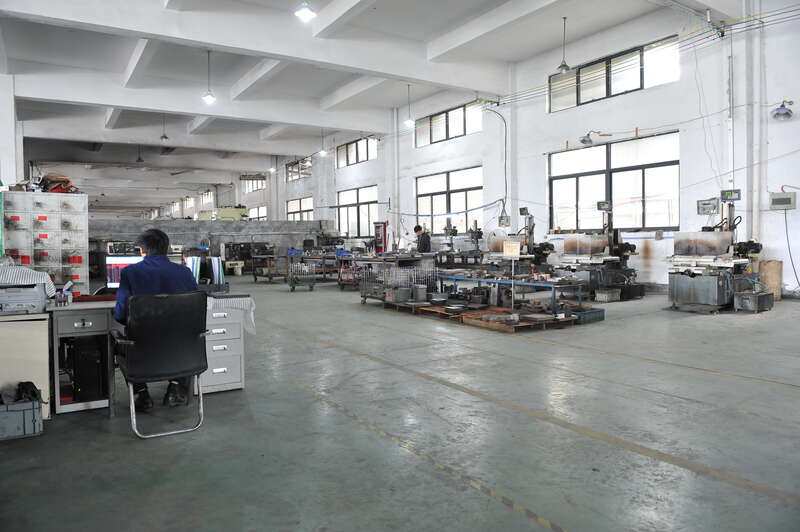
With over a decade of experience in automotive rubber component manufacturing, Chilong Auto Parts offers complete bushing production capabilities:
- Custom design and engineering — In-house R&D team can develop bushings to your exact specifications, including custom stiffness tuning
- OE-specification manufacturing — Production to OEM tolerances using certified materials from approved suppliers
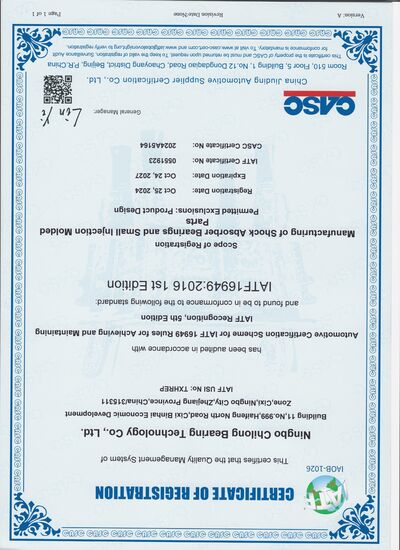
- IATF 16949 quality system — Fully documented quality management system with traceability across every production lot
- Comprehensive testing lab — In-house bond testing, compression set analysis, fatigue testing, and salt spray chambers
- Multiple material options — Natural rubber (NR), polyurethane (PU), synthetic rubber (EPDM, SBR), and custom compounds
- Flexible production volumes — From prototype runs of 100 pieces to mass production of 100,000+ units
B2B Sourcing Considerations
For procurement professionals evaluating bushing suppliers, these factors are critical:
| Factor | Typical Range | Notes |
|---|---|---|
| Minimum Order Quantity (MOQ) | 500–5,000 pcs | Depends on complexity; lower MOQs for standard designs |
| Tooling Cost | $1,000–$10,000 | Single-cavity compression molds are cheapest; multi-cavity injection molds cost more |
| Lead Time (prototype) | 2–4 weeks | Including mold design, material procurement, and sample production |
| Lead Time (mass production) | 4–8 weeks | After sample approval; depends on order volume |
| Material Certification | Required | Mill certificates for compound and batch test reports should be provided |
| Quality Documentation | PPAP, IMDS | OEM projects typically require PPAP Level 3 submission |
Frequently Asked Questions
How long do rubber suspension bushings last?
Natural rubber bushings typically last 50,000–80,000 km under normal driving conditions. Factors like climate, road conditions, and vehicle weight can significantly affect lifespan. Rubber-metal bonded bushings generally last 80,000–150,000 km.
Are polyurethane bushings worth the higher cost?
For performance-oriented applications, yes. Polyurethane bushings offer 2–3 times the lifespan of rubber and significantly improve handling precision. For daily-driven comfort vehicles, however, the increased NVH transfer may not justify the premium.
What causes bushing failure?
The most common causes are: natural aging/ozone cracking, oil or chemical contamination, impact damage from potholes or off-road use, and heat degradation from exhaust proximity. Bond failure in rubber-metal bushings is typically caused by manufacturing defects or overloading.
Can you mix different bushing materials on the same vehicle?
Yes, this is common. Many enthusiasts install polyurethane bushings in high-load locations (lower control arms) while keeping rubber in less critical positions (sway bar end links) to balance performance gains with daily comfort.
What is the difference between Shore A and Shore D hardness for bushings?
Shore A measures softer elastomers (typical range for bushings: 55–75 Shore A). Shore D measures harder materials (above 90 Shore A). Most suspension bushings use Shore A; solid polyurethane bushings sometimes approach the Shore D scale.
Does Chilong offer custom bushing designs?
Yes. Chilong's engineering team can design and manufacture custom bushings to your specifications, including custom rubber compounds, stiffness tuning, and unique geometries. Contact our sales team with your requirements for a technical review and quotation.
Need Expert Advice? Contact Our Team
Not sure which bushing material is right for your project? Our technical sales engineers can help you select the optimal solution based on your application requirements, volume, and budget.
Contact Our Team →