When diagnosing suspension noise or planning a strut replacement, many vehicle owners and even experienced mechanics use the terms "shock absorber bearing" and "top mount" interchangeably. However, these are two distinct components with different functions, failure modes, and replacement requirements.
In this comprehensive guide, we break down the differences between shock absorber bearings and top mounts (strut mounts), explain how they work together, and help you identify which part needs attention when suspension problems arise.
What Is a Shock Absorber Bearing?
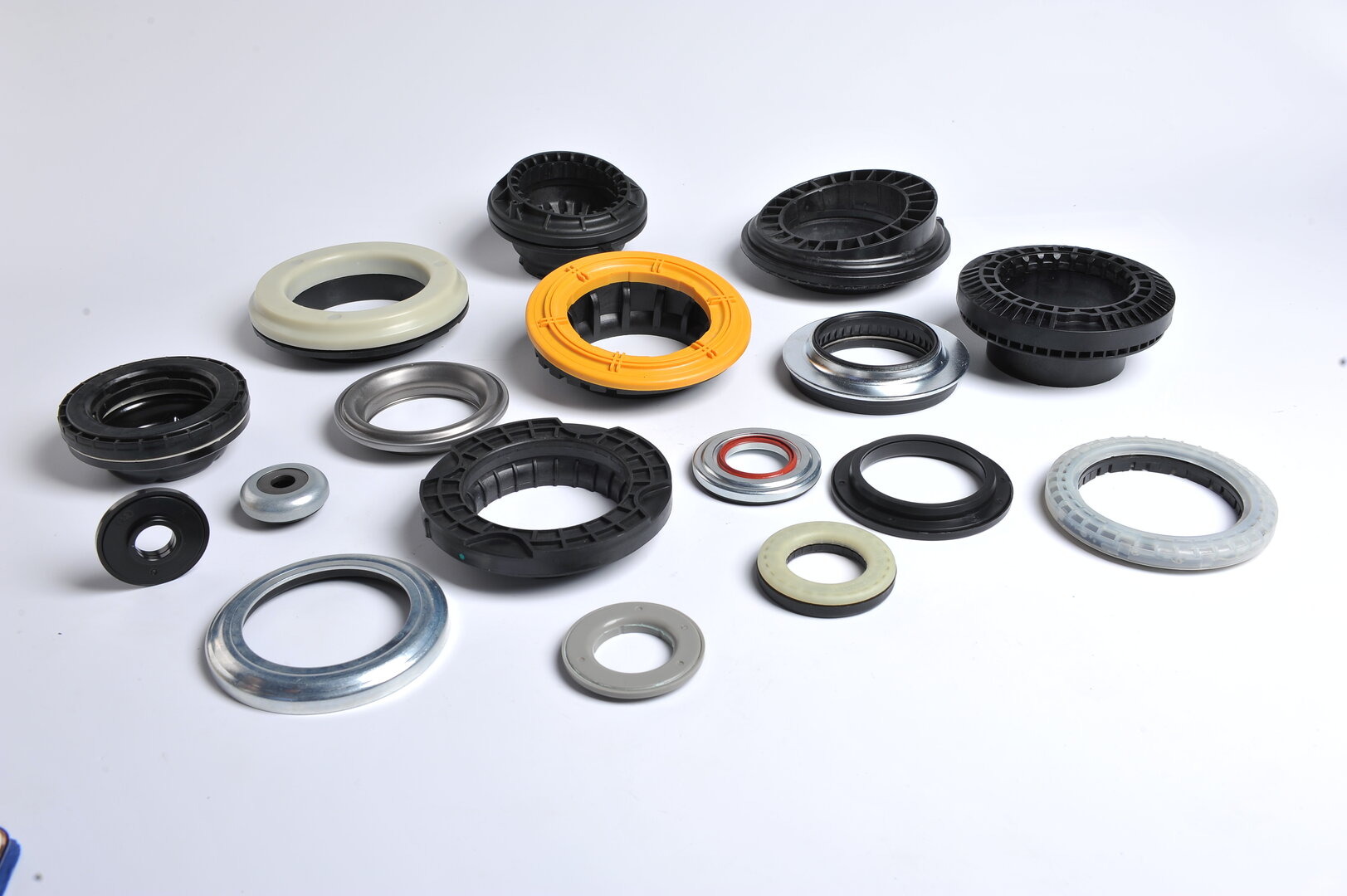
A shock absorber bearing (also called a strut bearing or suspension bearing) is a rotational component located at the top of the MacPherson strut assembly. Its primary function is to allow the strut to rotate with the steering knuckle when the steering wheel is turned, while simultaneously supporting the vehicle weight through the spring.
- Enables steering rotation — allows the strut assembly to pivot smoothly during steering inputs
- Contains rolling elements — typically deep-groove ball bearings or angular contact bearings made from GCr15 bearing steel (SAE 52100 equivalent)
- Reduces friction — minimizes resistance between the spring seat and the vehicle chassis
- Handles radial and axial loads — supports both vertical vehicle weight and lateral forces during cornering
What Is a Top Mount (Strut Mount)?
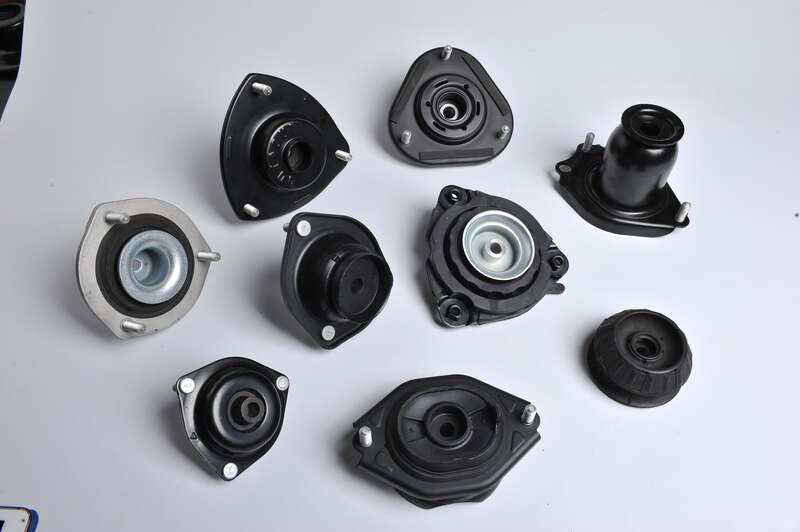
A top mount, also known as a strut mount or top strut mount, is the rubber-and-metal component that attaches the top of the strut assembly to the vehicle chassis (strut tower). It serves as the structural connection point between the suspension and the body of the vehicle.
- Structural connection — bolts directly to the strut tower and supports the vehicle weight
- Vibration damping — the rubber element isolates road noise and vibrations from the cabin
- Impact absorption — absorbs small impacts and prevents metal-to-metal contact
- Bonded construction — rubber vulcanized to metal inserts for strength and durability
Key Differences: Comparison Table
| Aspect | Shock Absorber Bearing | Top Mount (Strut Mount) |
|---|---|---|
| Primary Function | Allow strut rotation with steering | Connect strut to chassis & dampen vibrations |
| Location | Between coil spring and top mount | At top of strut tower, bolted to chassis |
| Main Material | Bearing steel (GCr15 / SAE 52100) | Rubber bonded to metal (NR/EPDM + steel) |
| Movement | Rotational (bearing spins) | Flexible compression (rubber deforms) |
| Common Failure | Rough rotation, grinding, seized bearing | Rubber cracking, sagging, torn bond |
| Key Symptoms | Popping when turning at low speed | Clunking over bumps, uneven tire wear |
| Replacement Interval | 60,000–100,000 km (37,000–62,000 mi) | 80,000–120,000 km (50,000–75,000 mi) |
| Typical Cost (Part) | $25–$60 | $40–$120 |
| Replacement Difficulty | Moderate (spring compressor needed) | Moderate (spring compressor needed) |
Note: Many modern vehicles integrate the bearing into the top mount assembly as a single "strut mount package." In these cases, if either component fails, the entire assembly must be replaced. Chilong Bearing offers both integrated assemblies and individual components.
How They Work Together
In a MacPherson strut suspension — the most common front suspension design worldwide — the shock absorber bearing and top mount are stacked together at the top of the strut assembly:
- The strut bearing sits between the coil spring seat and the top mount, allowing the entire strut assembly to rotate when the steering wheel turns.
- The top mount sits above the bearing and bolts directly to the strut tower, providing a flexible connection that absorbs vibrations.
- Together, they form the upper strut attachment point that keeps the suspension properly aligned while allowing steering movement.
Think of it this way: the bearing rotates, and the mount dampens. They complement each other but cannot substitute for one another.
Warning Signs: Which Component Is Failing?
Signs of a Failing Shock Absorber Bearing
- Popping/clicking when turning — the most common symptom; you’ll hear it at low speeds in parking lots
- Stiff or notchy steering feel — the bearing no longer rotates smoothly
- Grinding noise — indicates contamination or bearing wear
- Uneven steering return — the wheel does not self-center properly
Signs of a Failing Top Mount
- Clunking over bumps — worn rubber can no longer dampen impacts
- Excessive cabin vibration — degraded rubber transmits road noise
- Visible rubber cracking or tearing — inspect for age-related deterioration
- Wheel alignment changes — a sagging mount alters suspension geometry
Pro Tip: If you hear noise only when turning, suspect the bearing. If you hear noise on straight-line bumps, suspect the top mount. If both, replace the entire strut mount assembly.
OEM vs Aftermarket Options
| Factor | OEM Parts | Aftermarket Parts |
|---|---|---|
| Price | Higher ($60–$150+) | Lower ($20–$80) |
| Quality Assurance | Guaranteed OE spec | Varies by manufacturer |
| Availability | Dealer-only or limited | Widely available |
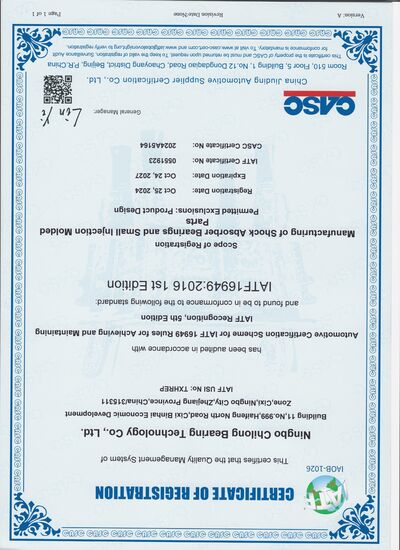
| IATF 16949 Certified | Usually yes | Check supplier |
| Custom OEM Service | Limited | Available from specialist manufacturers |
For B2B buyers and distributors, partnering with an IATF 16949-certified Chinese manufacturer like Chilong Bearing offers the best balance of quality and cost.
Why Quality Matters
Low-quality bearings and top mounts can lead to premature failure, safety risks, damage to other components, and higher total cost. At Chilong Bearing Technology, all our shock absorber bearings and top mounts are manufactured under IATF 16949 quality management systems. We use GCr15 bearing steel for our bearings and premium NR/EPDM rubber compounds for our top mounts, ensuring each component meets or exceeds OE specifications.
Frequently Asked Questions
Can I replace just the bearing without replacing the top mount?
It depends on the vehicle design. In some vehicles they are separate, but many modern vehicles use an integrated assembly. Many mechanics recommend replacing both simultaneously to avoid repeat labor costs.
How do I know if my strut bearing is bad?
Perform the "steering test": park on level ground and turn the steering wheel fully left and right at low speed. Popping or grinding indicates bearing failure. You may also feel vibration at the top of the strut when an assistant turns the wheel.
How long do these components last?
Shock absorber bearings typically last 60,000–100,000 km. Top mounts generally last 80,000–120,000 km. Actual lifespan depends on driving conditions, road quality, and vehicle weight.
Should I replace bearings and mounts in pairs?
Yes. Always replace both left and right side components at the same time to maintain balanced suspension performance and alignment.
Conclusion
Understanding the difference between shock absorber bearings and top mounts is essential for accurate diagnosis and cost-effective repairs. While they work together in the suspension system, they serve distinct functions and fail in different ways. For B2B buyers seeking reliable, IATF 16949-certified components, Chilong Bearing Technology offers a complete range of shock absorber bearings, top mounts, and integrated strut mount assemblies.
Need Expert Advice?
Contact our team for professional guidance on your suspension component requirements. We're here to help with OEM/ODM projects, custom manufacturing, and technical consultation.
Contact Our Team